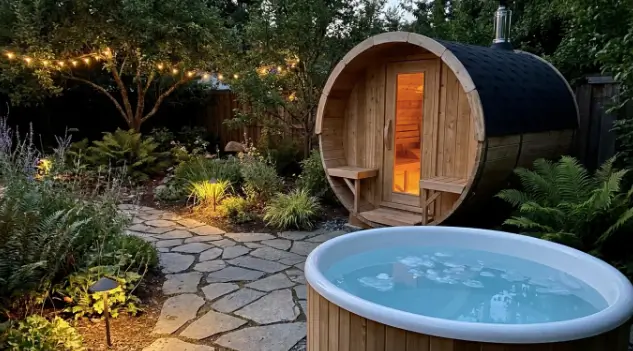
A first sauna kit purchase comes down to six decisions: heater size matched to cabin volume, electric versus wood-fired heat, what the kit box actually includes, the base it sits on, the electrical budget, and realistic assembly time. A basic two-to-four-person cedar kit with heater runs $3,000 to $6,000 before electrical work, takes a weekend to assemble for two people, and needs a dedicated 240-volt circuit if the heater is above roughly 5 kilowatts.
1. Match Heater Size to Cabin Volume, Not Floor Space
Heater output is sold in kilowatts and needs to track the cabin’s cubic footage, including ceiling height and any glass, not just the square footage of the floor. A tall cabin or one with a large glass door loses heat faster than a low, tight box of the same footprint and needs a bigger heater to compensate. Every legitimate kit maker publishes a sizing chart matching kilowatts to cubic feet; a kit listed with a vague “powerful heater” instead of a specific kilowatt number is worth skipping.
2. Decide Between Electric and Wood-Fired Heat Before Comparing Kits
Electric heaters run on a thermostat, reach temperature in 30 to 40 minutes, and need a 240-volt circuit for anything above a small unit. Wood-fired heaters skip the electrical work entirely, take 45 minutes to an hour to heat, and require someone tending the fire and sourcing firewood. Neither is the objectively better choice; it is a tradeoff between convenience and the ritual some people specifically want from a wood-fired session, and it is worth deciding before comparing specific kits so the search does not mix two different heating systems.
3. Check What the Kit Box Actually Includes
Kit listings vary more than they first appear. Some include the heater, stones, bucket, ladle, and benches in the price; others sell the cabin shell alone and price the heater as a separate line item. Reading the included-parts list closely, not just the headline price, is the fastest way to avoid a surprise add-on cost after ordering. Comparing full listings side by side on a retailer site such as sweatdecks.com, where heater, accessories, and price are usually broken out per kit, makes this easier than reading a single product page in isolation.
4. Plan the Base Before the Kit Arrives
Most kits need a level, well-drained surface rather than a poured foundation: a compacted gravel pad, a paver base, or an existing deck rated for the load all work. A DIY gravel pad typically runs $300 to $600 in materials for a small kit footprint. Building or confirming the base before the kit ships means it can go straight to assembly on delivery day instead of sitting in boxes in the garage for a few extra weeks.
5. Budget for Electrical Work as Its Own Line Item
A dedicated 240-volt circuit for a 6-to-9-kilowatt heater typically costs $500 to $1,500 depending on distance from the panel and whether the panel has spare capacity. This cost never shows up on the kit’s price tag, which is why so many first-time buyers are surprised by it after the fact. Getting a quote from an electrician before ordering, using the heater’s listed amperage from the spec sheet, keeps the total project budget honest from the start.
6. Expect a Weekend of Assembly, Not a Few Hours
Pre-cut kits ship with numbered panels designed to interlock or bolt together, and most two-person teams with basic hand and power tools finish assembly in one full weekend. A first-time build sometimes runs longer, especially fitting the roof and door hardware, so blocking out a full two days rather than a single afternoon avoids rushing the parts that matter most for weather sealing.
7. Understand What the Health Research Actually Shows
A review in Mayo Clinic Proceedings summarized cardiovascular and general health associations linked to regular sauna bathing across multiple studies. A systematic review of regular dry sauna bathing found similar associations concentrated among frequent, moderate users rather than occasional ones. An older review in The American Journal of Medicine covering both benefits and contraindications found most healthy adults tolerate regular sessions well. These are population-level associations from mostly Finnish cohorts, not a guarantee tied to any specific kit or brand, and a new owner should treat the research as context rather than a medical promise.
8. Plan for Basic Upkeep From Day One
A new kit owner should budget a small amount of ongoing time and money beyond the purchase itself. Sauna stones lose their ability to hold and radiate heat over months of use and are typically swapped once a year for $30 to $60. The interior wood benefits from an occasional wipe-down with a food-grade conditioning oil to prevent drying and cracking, especially in the first year while the cedar is still adjusting to repeated heat cycles. Door seals and hinges are worth a quick visual check every few months, since a seal that starts sticking or not closing flush lets heat escape and makes the heater work harder than it should. None of this takes more than an hour every few months, but skipping it is how a kit that should last a decade or more starts showing wear within a couple of winters. Keeping a simple log of when stones were last replaced and when the panels were last oiled, even just a note on a phone, is a small habit that makes it easy to stay ahead of maintenance instead of reacting once a problem is already visible. New owners who set this up in the first month tend to find it becomes automatic well before the first service is actually due.
Frequently Asked Questions
How much does a first sauna kit typically cost? A basic two-to-four-person cedar kit with heater runs roughly $3,000 to $6,000, before electrical work and a base.
How long does it take to assemble a sauna kit? Most kits take one full weekend for two people with basic tools, since panels are numbered and designed to interlock or bolt together.
Do you need a permit to install a sauna kit? It depends on the structure size and local rules, but electrical work almost always requires a permit and inspection.
Is a beginner better off with electric or wood-fired heat? Electric is the more common first choice for its thermostat control and consistency. Wood-fired suits people who want the fire-tending ritual and are willing to trade convenience for it.
References
- Effects of heat and cold on health, with special reference to Finnish sauna bathing, American Journal of Physiology – Regulatory, Integrative and Comparative Physiology, 2018
- Cardiovascular and Other Health Benefits of Sauna Bathing: A Review of the Evidence, Mayo Clinic Proceedings, 2018
- Clinical Effects of Regular Dry Sauna Bathing: A Systematic Review, Evidence-Based Complementary and Alternative Medicine, 2018
- Saunas and your health, Harvard Health Publishing
By Nathan Holloway